
Influencer or a Digital Slut?

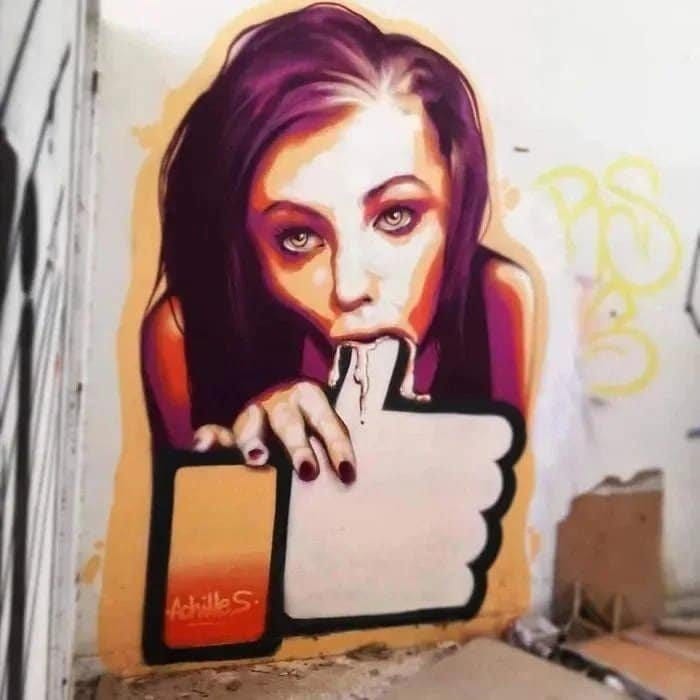
"Instagram is pulling the plug on displaying LIKE counts!"—that's the wail heard from some "influencers."
More accurately, from female influencers. And to be even more precise, they aren't influencers at all, but digital sluts. Let's break down who is a real influencer and who is definitely not.
Defining the Difference
Let's start with the most basic element: defining what an "influencer" is. The Oxford Dictionary clearly defines it:
Influencer: noun;
A person or thing that influences another.
In marketing: A person with the ability to influence potential buyers of a product or service by promoting or recommending items on social media.
The definition is pretty straightforward, isn't it? A person with the ability to influence buyers. It does not say, "a person with at least a C-cup and lips plumped to the size of bratwursts." Nor does it say, "a person who believes they have influence over buyers."
I've long held a favorite, sarcastic saying: "Being popular on the internet is exactly the same as being rich in Monopoly."
While the true purpose of Monopoly is to understand the cutthroat nature of a business environment, the internet created a whole new, often meaningless, currency of popularity.
Of course, there are exceptions. People like the Kardashian family are genuinely popular online and earn a substantial living from it. They are a unique global phenomena. But they are just that—exceptions. In the grand scheme, they are the statistical "deviation from the norm." Just as an anatomy textbook defines a normal person as having five fingers on each limb, these major stars are the rare six-fingered individuals—visible, but not the standard we should measure success by. The vast majority of online popularity is still Monopoly money.
The Two Types of Influence
Is being an influencer a bad thing? Absolutely not, if you are a genuine one. Real influencers often fall into different categories:
Opinion Leaders (The Scrutinizers): These are figures like an investigative journalist—people focused on shaping public discourse about what is right and what is wrong. While they influence public thinking, they don't generally sell products. In fact, no business wants to be featured negatively on their feed.
Market Shapers (The Endorsers): These are influencers that businesses actively want to partner with. Think of someone like Kim Kardashian. Businesses that target specific, high-spending demographics—women aged 22–45, with mid-to-high incomes interested in fashion, beauty, and self-care—will pay top dollar for a post on her feed.
The difference is key: every brand dreams of getting onto Kim Kardashian's wall (by choice), while no one wants to end up on the wall of an investigative journalist (against their will).
However, surrounding these legitimate figures are thousands of "wannabe" influencers. These are largely individuals who flood social networks with posts, photos, and, yes, various body parts, often resorting to buying followers.
These are the digital sluts (no matter which chromosomes they have).
Attention: The Currency of the Internet
Psychologists call it the "desire to be liked," while others call it the "desire to be noticed." Social media provided an unprecedented platform for this. I once joked that "breasts and kittens get the most LIKES," and since then, the phenomenon has exploded.
Look at streaming platforms like Twitch. Girls who are far less skilled than professional gamers often rack up dramatically more viewers simply because they have larger, more visible chests. This is pure attention-seeking, not skill-based influence.
Why does this happen? It's really simple - everyone craves attention. The ways people seek it vary wildly: from dyeing hair bright colors or getting aggressive after a few drinks, to covering their face in tattoos or piercings. But what about the people who haven't the courage for any of the above? They post revealing selfies.
Before the internet, gaining public attention required immense effort—getting on a stage, speaking at a public forum, or achieving genuine notoriety. The internet changed everything. It opened the Pandora's Box, allowing everyone to speak out on any topic, at any time, with almost zero cost. What poured out was a huge stream of lips, breasts, and kittens.
Working with the Real Influencers
The most alarming aspect of this trend is when these "lips, breasts, and kittens" start contacting legitimate businesses with offers like, "I'll be in your town and could stay at your hotel. If I like it, I'll post about your business on my Instagram/Facebook, and you’ll see how many customers you get."
My response: “What customers, darling? Ninety-eight percent of your Instagram followers are men who came to rub one out on your half-naked photos, not potential buyers of my product."
As I’ve said before: Sex doesn't sell your product; it sells the illusion of a connection to you.
If you run a business, here is how to work with real influencers—and how to avoid the digital hustlers:
Establish a Transactional Deal: The influencer buys your product/service. You provide them with a special discount code. If that code is used X times within X days, you refund their money. You can even "sweeten" the deal by paying them an additional fee if the code is used N times. This measures real influence.
Avoid the Initiators: If the influencer reaches out to you first, especially demanding free goods or services, it is likely not a collaboration worth pursuing.
Measure Engagement: Look for a high engagement rate (comments, shares, saves relative to followers). Ideally, this should be 2–4% or higher. The follower count is irrelevant if nobody is engaging.
Segment Aggressively: Be precise about the demographic you want to reach. The followers of one high-profile personality may appear similar to another’s, but their purchasing habits are often vastly different.
Analyze ROI: What is the cost-quality ratio? How many potential customers can you gain for the amount you spend?
Segmentation, segmentation, segmentation is the only way to avoid wasting your marketing budget on empty exposure. A high follower count does not equal quality or real influence.
The Trap of "Empty LIKES"
The phenomenon of "empty LIKES" is highly relevant. For instance, I once wrote a very sad story on my personal Facebook profile about dog aggression. It garnered over 7,800 reactions and 7.8 thousand shares. My follower count? It did not change.
This is the definition of "empty LIKES": you successfully provoke a strong emotional reaction and high engagement, but you receive no tangible benefit or long-term audience growth from it.
Epilogue
Having hundreds, thousands, or even hundreds of thousands of followers does not make you an influencer. Just as owning an expensive car doesn't make you a professional race car driver. Having a college degree doesn't automatically make you educated. Having money doesn't automatically make you rich.
In all cases, the most important thing is how and for what you use what you have.
>”I'm an Instagram model!”
“And I'm a millionaire and a real estate mogul… in Monopoly. Nice to meet you.”
Now, go hit that LIKE button and write an angry comment!
Actually quite an enjoyable read and perspective!
I do think, though, empty likes are still a form of validation. They give a feeling of being seen even if not actual followers come from it. It may be empty to some, but to others it may be the difference of 'normal one cares' to 'someone sees me.'
Just my thoughts. ❤️ Thank you for sharing!