
Your Substack is Dying
Because You Still Have Your Dignity


You’ve read this article before. Some variation of it. Ten Ways to Grow Your Substack. How I Got To 1,000 Subscribers. The Secret To Notes Engagement. You’ve read it, you’ve saved it, and your subscriber list has looked just the same for three months.
So, either you didn’t take those suggestions seriously, or they didn’t work. Either way, keep reading until the very end.
Okay. Let’s start with the basics. Many writers feel that the following is too complicated for them.
Your profile is a sales pitch.
Use it as such. Your bio is intended for someone who has found your writing in the feed and is making a decision — for approximately three seconds — about whether or not to click. They want to know what they’ll be receiving if they sign up, so you need to clearly articulate that in one line. We’ll go over that part further in this article.
Do you have a condition — ADHD, PTSD, autism, dyslexia, anxiety, depression, etc.? Put it there. Don’t have one? Do research on the symptoms; I’m confident you’ll find something that fits perfectly. Who needs an “official” diagnosis anymore when we have Dr. Google? Add it at the top. Right before your genre, right under your name. It’s kind of like how the vegan crowd introduces themselves by first mentioning that they’re vegan. Everything else comes second. I’ll explain why later.
Notes are not optional.
This is where many writers screw up. They put out one big essay a week (maybe two) and then wait for the algorithm to give them a push. It won’t. The Substack algorithm likes action, i.e., publishing multiple Notes. Three per day is what people mention; whether that number is mythical or magical isn’t important. Substack allows you to schedule the Notes ahead of time now, so you don’t have to sit there all day waiting for inspiration to strike at random moments and hit the publish button.
Engagement is currency.
Instead of focusing solely on promoting your own stuff, focus on engaging with others’ stuff. Identify other writers with significantly fewer readers than you have and provide thoughtful commentary on their posts. “Good post!” isn’t enough — you need to indicate that you actually read their stuff. When they recognize your name in their comments, they’ll likely come check out your profile and most probably subscribe. If your comment is particularly well-written, their audience sees your name and checks out your profile, and they might also subscribe. Those with lower subscriber counts will notice you engaging with them, and be amazed by your interest in their work, and that will land you a subscription. This is literally the fastest growth hack on the platform — and hardly anyone uses it regularly. I call it “exploitation of the noobies,” but that’s just me.
By now, if you’ve been on Substack longer than a month, nothing I mentioned above is new. You know all of this. Everybody knows this. The question is, why are some people growing, and you aren’t?
Let me tell you why.
That writer who leaves thoughtful comments on smaller accounts in your niche? Check out their comments sometime in the near future. Have they continued to engage with the people who followed them back? Ninety-five percent of the time, they haven’t. They earned the sub; they moved on. Their thoughtful comment wasn’t about helping build the community — it was about acquiring a subscriber.
Some of them even have podcasts. They’ll interview you about your craft; ask about your process; why you chose to use a certain word in paragraph three of a piece they commented on two hours after it posted. They’ll ask you about the frequency of words — how many times you used a particular word throughout a single essay. Someone who posts six pieces a week and at least 5 Notes per day is tracking your vocabulary choices across a single essay. How do they do that?
Hang onto that question and the discomfort. We’re just getting going.
Choose a style that few people can effectively compete with.
Poetry is the most commonly used option — but it’s not because these people love poetry. The poetry communities on Substack are among the friendliest and most open-minded groups on the platform — they tend to read each other’s work, offer support and encouragement, and generally don’t gatekeep anything. Which is exactly what makes them the ideal targets. A twelve-line poem about grief earns a “Beautiful” and a heart emoji; no one ever asks you about your process; no one ever scans it with a detector. And if the poem is terrible — that’s okay, poetry is subjective — calling someone’s poem terrible makes you the villain, not them. The community’s openness is its vulnerability. The grifter exploits the poets.
Haiku chains are engagement gold mines.
Someone tags you in a haiku chain. You reply, they respond, then another writer joins in, and suddenly four writers are visible in each other’s feeds, cross-promoting each other’s audiences, all within ninety seconds. You don’t need to understand what a haiku is — five syllables, seven syllables, five syllables. Done. Nobody grades these. Prior to 2023, most people using this platform had never written a haiku in their lives. Now they’re writing six a day. How?
Join prompt chains.
Someone posts a prompt — a sentence, an idea, sometimes an AI-generated image — and you “write” something based on it. Write your response, give credit to the original prompter, and tag them in your post. Each participant in the chain responds to each other’s contributions. It’s a writing community performing the motions of writing. The credit line at the bottom of each contribution reads: “Based on a prompt by.” It should read: “Prompted from a prompt by,” but nobody has updated that language yet. Occasionally, someone forgets to include the prompt altogether, and you get to see the scaffolding: “Prompt here.” Where the content would normally reside, a placeholder instead lies. It’s not figurative language. It’s what I have seen. If you see “Prompt here” in a post, don't laugh. That writer is high-volume. They’ve optimized the 'copy-paste' pipeline so thoroughly that the human element — the actual editing — is the only bottleneck left.
If you’re reading this and thinking “that sounds cynical,” pause for a minute and ask yourself: Is this cynical, or am I simply telling the truth about what works? Because the writers who are experiencing success today are using this exact strategy. Every day. Without appearing to have any guilt regarding it.
However, let’s break down how much math is involved.
Come on, let’s be realistic about this for a second. A normal person — one that has responsibilities beyond this platform: working, raising kids, having a life — cannot possibly spend hours every day commenting on Notes, writing three Notes of their own, creating two long-form essays per week, participating in haiku chains, contributing to prompt posts, offering thoughtful comments on fifteen smaller accounts, and still produce high-quality writing.
There simply aren’t enough hours in the day.
So look at all the writers doing all of that. Producing content, engaging, being present, writing every single day. And ask yourself: how?
I’m sure you already know the answer. You’ve known it for a while. You just haven’t said it out loud because saying it out loud makes all of this real.
They’re using AI.
For the Notes. For the long-form. Even for the comments. For the poetry — oh, especially the poetry. For the haiku — definitely the haiku. For the prompt responses. Some of them are using it for everything, and all they’re writing with their own hands is that condition in the bio that convinces you they’re a real person with a compelling backstory and a... series of prompts in their ShitGPT or an alternative tool.
And no one calls them out on it.
Why? Because calling someone out on this means labeling a person with ADHD, anxiety, PTSD, and trauma as dishonest. And nobody wants to be that person.
Remember how, at the start, I told you to find a condition to add to your profile? This is the why. What’s in your profile is impenetrable armor. A diagnosis on your profile shields whatever output you produce from scrutiny, because no one wants to run an AI detection scanner on the poetry of someone who listed their trauma or a condition in their bio.
By the way, poetry isn’t detectable via AI detection software due to its brevity, subjectivity, and fragmentation. A twelve-line poem about grief will trigger false positives in every detector on the market. So if someone were to run a scan, the poet could easily claim the tools are biased against neurodivergent writing styles — thereby protecting their output.
This is how it works.
Profile optimized for sympathy. Genre selected for undetectability. Output created by AI. Engagement either automated or templated. Growth continues unabated. And the people executing this model aren’t hiding. They’re currently commenting on your content, increasing their own visibility, and once you follow them back, they’ll move on.
Everything above works. I know. I watch it happen every week.
The profiles listing medical conditions as credentials. The engagement that disappears immediately after landing a sub. The poetry nobody sat down and wrote. The haiku chains designed to game a feed, not to make art. The prompt responses with the scaffolding still attached. The podcasts where they interrogate your word choices using the same tool that wrote their last dozen posts.
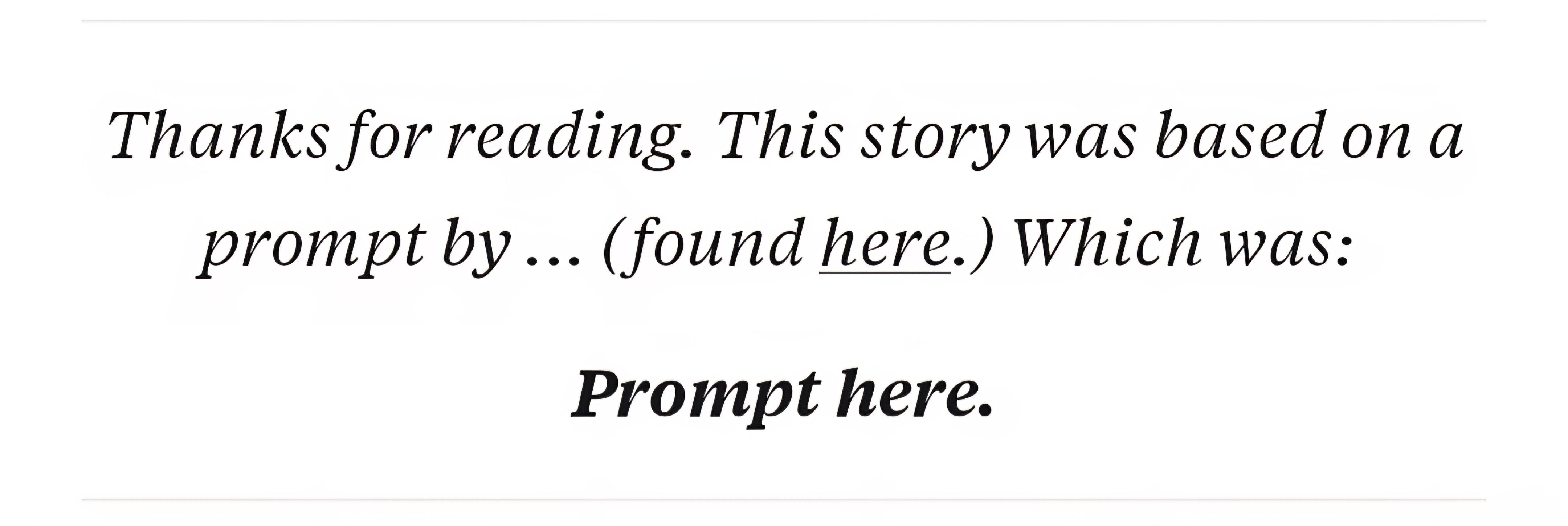
You just read a guide to building a Substack on fraud. The advice was real. The playbook is real. People are running it right now, today, and some of them are in your comments section.
The only question is whether you knew this before I told you. If you did, you’re just another AIWITNESS. Not even a Word of The Day anymore. Word of The Year.
Can my condition be BAM? As in Badass Mexican 😎🌵
Also I want to be submitting my works to publications... But the guilt of not publishing it on substack and leaving my subscribers hanging... I just can't write fast enough. The volume to do both. The pressure keeps me from even opening this app sometimes...