
The Pirate

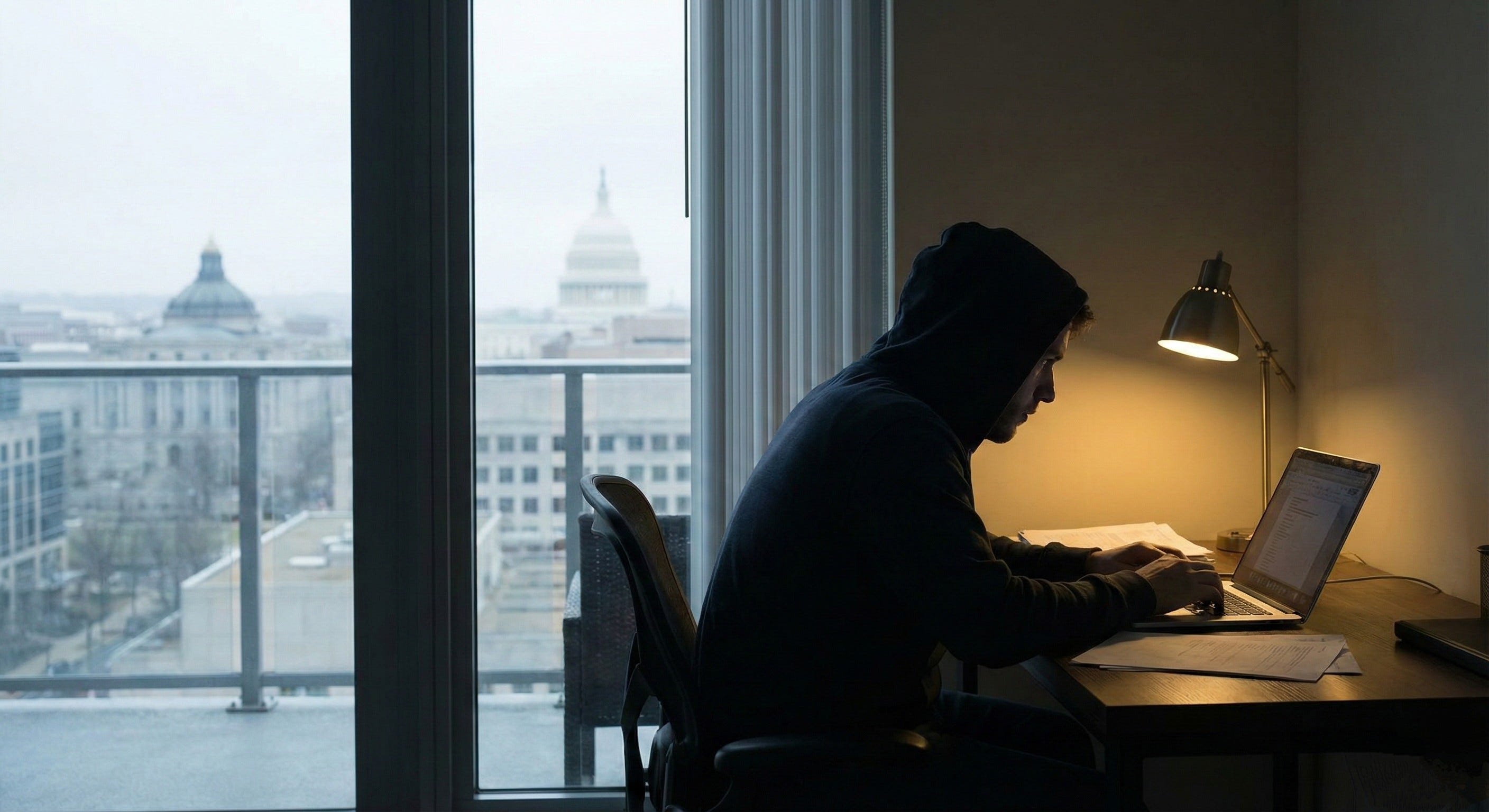
Loren Hartwell has been running the operation for twenty-three years.
Three thousand registered accounts in her system. Hundreds of requests processed every week. A catalog spanning genres, formats, decades—romance, literary fiction, mystery, science fiction, memoir, poetry. Someone wants it, Loren gets it to them. Supply and demand.
No payment required. Never has been.
The core principle is simple: you want a book, you get a book. No questions asked.
And the numbers tell the story. Five hundred titles moving through the system in a single month. Multiply that across two decades—over a hundred thousand books acquired, cataloged, made available to anyone who asks.
This bothers some people, Loren knows this, and the complaints arrive occasionally with accusations of theft and demands to shut down and threats of legal action, all of which Loren reads.
Tuesday morning the inbox loads with forty-seven new messages, mostly requests—someone asking for the latest Tana French, another wanting back issues of a poetry journal, a college student needing three books on Islamic architecture, please and thank you.
Loren works through them methodically, checking availability, updating the queue, sending confirmations.
Message thirty-two stands out.
Subject line: “You’re stealing from me.”
The sender’s name means nothing but Loren opens it anyway.
“What you’re doing is theft from authors like me!”
One line. No signature. No context.
Loren reads it twice, and a smile tugs at the corner of her mouth.
The cursor hovers over “Report as SPAM” and with one click the message vanishes.
Message thirty-three is another request—someone’s teenage daughter wants the Percy Jackson series, all of them if possible.
Loren types a reply: “We have the complete set. I’ll have them.”
The work continues.
Emily Goldberg spent three years writing her novel.
Two years drafting it in the hours before her shift as a hospital intake coordinator, another year revising after beta readers tore apart her first ending. No agent. No publisher. Just Emily and the manuscript she believed in enough to pay for.
Eight thousand dollars for editing—developmental, line, and copy—plus two thousand for cover design, another fifteen hundred for formatting and ISBN registration, distribution setup; three thousand more for marketing which meant Facebook ads and Amazon promotions, and a book tour through independent bookstores in the Midwest.
Total investment: fourteen thousand five hundred dollars.
Her book released in March and by October she’d sold 1,247 copies, which at $2.47 per sale after platform fees and printing costs meant she’d earned $3,080, leaving her $11,420 in the red.
Emily checked her sales dashboard every morning watching the numbers climb slowly—twenty copies one week, thirty-five the next—while reviews kept appearing on Goodreads and her inbox filled with messages from readers telling her the ending made them cry, that they’d recommended it to their book clubs, that they couldn’t wait for her next book.
At a bookstore reading in September, a woman approached the signing table. “I have to tell you,” the woman said, “this book wrecked me. I’ve been telling everyone about it.”
Emily’s chest swelled. “Thank you. That means everything.”
“I can’t wait to see what you write next.”
Emily smiled, reached for her pen. “Would you like me to sign your copy?”
The woman blinked. “Oh—I don’t have it with me. I already read it. Just wanted to tell you how much I loved it.”
“Of course.” Emily’s hand dropped. “I’m so glad you enjoyed it.”
The woman left and Emily sat at the empty table for another forty minutes while three people browsed the shelves and no one approached.
This happened again in October—a man at a coffee shop recognized her name from her author photo, loved the book, told his entire office about it, already finished it though so just wanted to say hi.
November brought a teenager at the grocery store. December brought two women at a yoga class.
All of them enthusiastic. None of them had bought it.
Emily’s sales dashboard barely moved, showing 1,389 copies by New Year’s, and she started drafting her second novel in January before stopping after three chapters because the math didn’t work.
Even if the second book sold twice as many copies she’d still be underwater, couldn’t afford another fourteen thousand, couldn’t justify it when the first investment still hadn’t paid off.
Emily opened a spreadsheet and started calculating how many extra shifts she’d need to pick up to clear the debt by next year.
James Forrest’s first book cost him fifteen thousand dollars.
He didn’t know better—a company called Prestige Publishing reached out after he’d queried agents for six months with no bites, said they loved his manuscript and saw real potential and wanted to partner with him to bring it to market.
Partnership meant payment: editing package four thousand, cover design two thousand, marketing and distribution six thousand, print run three thousand.
“Investment in your career,” the acquisition editor said on the phone. “Think of it as buying into your own success.”
James bought in.
The book released and Prestige sent him a box of twenty author copies and a link to the Amazon listing with no marketing, no distribution, no bookstore placement, just a listing and a price tag.
He sold forty-seven copies, most of them to family.
It took James eight months to realize he’d been scammed, finding the reviews online from other authors warning about Prestige and calling them a vanity press and a predatory publisher, and he felt sick reading them, felt sicker knowing he’d put the fifteen thousand on a credit card that took him two years to pay off.
With book two he did it right—hired a real editor through referrals, found a designer on Reedsy, learned how to format the files himself, budgeted carefully at forty-five hundred total.
The book released in June and by December it had sold 782 copies, which at $2.85 per sale after fees meant he’d earned $2,229, still twenty-two hundred in the red on book two and eighteen thousand total if he counted the vanity press disaster.
Reviews kept coming in with five stars and four stars and readers calling it “gripping” and “unputdownable” and “better than anything I’ve read this year,” but his sales rank didn’t reflect it and the numbers climbed too slowly.
James started seeing the pattern in November when a reader messaged him on Instagram saying she loved the book and couldn’t stop thinking about the ending, so James thanked her and asked if she’d consider leaving a review.
“Oh, I didn’t buy it,” she said. “But I’ll definitely recommend it!”
James stared at the message wondering how she’d read it if she didn’t buy it, and then another message came a week later with the same enthusiasm and the same vague acknowledgment that they hadn’t purchased a copy, and another in December.
James pulled up his sales data showing seven hundred eighty-two purchases while his Goodreads page showed over a thousand ratings, and the gap didn’t make sense.
He opened the manuscript file for book three, the one he’d started outlining in September back when he thought book two’s momentum would carry him forward, and he stared at the blank page while the credit card statement sat on his desk showing minimum payment due at $340.
James closed the manuscript, opened LinkedIn, updated his resume.
Abigail Garbo got the call in August.
Her editor’s voice sounded apologetic—the first book hadn’t performed as expected, sales were below projections, the publisher wouldn’t be exercising the option for book two.
“It’s nothing personal,” her editor said. “The numbers just don’t justify the advance.”
Abigail sat in her car in the grocery store parking lot with the phone pressed to her ear trying to process it.
Her debut had sold 3,100 copies which wasn’t amazing but was respectable for a first-time author, and the reviews were strong with a starred review from Kirkus and positive coverage in Publishers Weekly, and readers posted photos on Instagram and wrote long threads on Twitter about the themes, even created fan art.
Her publisher had given her a twenty-five-thousand-dollar advance and after agent commission and taxes she’d cleared about seventeen thousand.
The math worked like this: she earned $2.10 per paperback sale after the advance earned out, so to earn out a twenty-five-thousand-dollar advance she needed to sell roughly twelve thousand copies.
At 3,100 sales she’d earned about $6,500 in royalties against the advance, still eighteen thousand short.
Her publisher called it underperformance.
Abigail called it the end of her career.
Going the self-publishing route wasn’t an option because she didn’t have four figures to invest in editing and design, and her day job as a paralegal barely covered rent and student loans, and the advance from her first book had been a lifeline that she’d used to pay off credit card debt and replace her dying car.
She couldn’t write book two without money, couldn’t get money without sales, couldn’t get sales without a publisher making her book a “lead title,” and the loop closed around her.
In September she searched her book title on social media and found dozens of posts with readers discussing it and analyzing the ending and debating character motivations.
“Just finished this and WOW,” one tweet said. “Got the file yesterday and flew through it. Everyone needs to read this.”
Sixty-three likes. Forty-one retweets.
Abigail clicked through the thread finding dozens of replies saying “Going to get it now!” and “Where can I find it?” and “Just downloaded it!”
Her throat tightened and her vision blurred at the edges.
She closed the app, opened a job search site, started browsing listings for legal assistant positions that paid more than paralegal work and might give her enough buffer to afford health insurance and an emergency fund and didn’t leave room for writing.
By October she’d accepted an offer at fifty-five thousand a year with benefits and predictable hours.
The manuscript for book two sat in a folder on her desktop with forty thousand words and a complete outline and characters she loved, and she dragged the folder to the trash, then emptied it, and opened her email to draft a message to her agent saying “I need to let you know I won’t be pursuing publishing anymore.”
She stared at the words for five minutes, hit send, closed her laptop.
The next morning she started her new job.
The thread started on a writers’ forum in late January.
Subject: High engagement, low sales. The Gap.
The original poster didn’t hold back, laying out the whole frustrating pattern in detail—readers everywhere saying they loved the book, posting about it, recommending it to friends, but the actual sales numbers were completely stagnant and nobody could figure out where all these enthusiastic readers were actually getting the books from if they weren’t buying them.
The replies came within minutes.
“Oh my god THANK YOU, I thought I was completely losing my mind because I have over a thousand Goodreads ratings but I’ve only sold six hundred copies and the math makes absolutely no sense.”
“Same here, forty-seven reviews on Amazon but my sales dashboard says two hundred copies sold, like how is that even possible unless people are reading it without buying it?”
Someone dropped a link with a note that just said “Found the problem” and it was a Reddit post from some guy openly bragging about running what he called a free book network, saying he’d been doing it for over twenty years and had thousands of users who could request whatever they wanted.
The thread exploded after that. Writers started sharing screenshots, digging up more evidence. What made everyone even angrier was that this operation wasn’t even hiding—it was completely public, the guy was proud of it, talking about his numbers like he was running some kind of charitable service.
By the next morning there were over three hundred replies and most of them were variations on “how is this legal” and “someone needs to shut this down.”
That’s when the pirate showed up.
The username was “FreeReader77” and the account had been active since 2003 with thousands of posts across multiple forums, so this wasn’t some random troll, this was someone who’d been doing this for decades and knew exactly what they were doing.
FreeReader77 jumped straight into the thread: “I’m reading all this outrage about theft and I have to say, you people have no idea what you’re talking about because I BUY every single book I share, I pay for them with my own money. And once I’ve purchased something it becomes my property and I have every legal right to do whatever I want with it including lending it to three thousand people if I feel like it.”
AuthorJamesF responded pretty quick: “You’re not just lending to friends though, you’ve literally built an entire distribution system that operates at scale and every single person who reads through your network is someone who should have purchased the book themselves, so yeah, you’re directly cutting into our income.”
FreeReader77 shot back: “Should have purchased it according to who, you? Most of the people I help are on fixed incomes or they’re students or they just can’t afford to drop fifteen bucks on every book they want to read, so those weren’t going to be sales for you anyway, and honestly if you look at it from a different angle I’m actually doing you a favor by building your readership and getting your work in front of people who might buy your next book.”
AuthorAbigailG jumped in: “We don’t need readership, we need actual money because readership doesn’t pay rent and it doesn’t cover the cost of editing, design, and all the other things we have to pay for upfront. And what you’re doing is systematically destroying the midlist which is where most of us are trying to build careers.”
FreeReader77 didn’t back down: “The publishers destroyed the midlist twenty years ago when they decided only blockbusters were worth investing in, so don’t put that on me. I’m just helping people access books after your precious industry priced them out of being able to participate in literary culture.”
WriterEmilyG tried a different angle: “Okay let me give you an analogy that might make this clearer: when you buy a movie ticket you get to see the movie once and that’s it, you don’t get to bring fifty of your friends in for free just because you personally paid for access, and books should work the same way where each reader represents a separate transaction.”
FreeReader77 came back hard on that one: “That’s a shit analogy because the movie theater doesn’t give you ownership of anything, but when I buy a book—whether it’s physical or digital—I own it, it’s my property. And I have the right to lend my property to anyone I want for any reason I want, and I’m not charging anyone a dime so I’m definitely not running a business, I’m just sharing things I’ve legally purchased.”
WriterEmilyG pushed back: “But you’re not sharing with a few friends, you’re sharing with thousands of people, that’s not personal lending that’s mass distribution and you know it.”
FreeReader77 replied: “And? It’s still legal and I’m still not making money off it, and if I’m being completely honest here. If you wrote better books, people would buy them even after reading my copy because they’d want to support you, so maybe the real problem isn’t me, maybe it’s that your work isn’t compelling enough to convert readers into customers.”
AuthorJamesF lost it at that point: “You know exactly what you’re doing, you know you’re hurting working writers and you just don’t give a shit because you’ve wrapped it up in this bullshit rhetoric about access and sharing.”
FreeReader77 came back even harder: “Yeah I don’t give a shit about your feelings, you’re right about that, because I care about readers who’ve been priced out of participating in culture and if that hurts your bottom line then maybe you should get a real job instead of expecting the world to subsidize your hobby. Because I’ve been doing this for over twenty years and publishing hasn’t collapsed yet so clearly the industry can survive without your three thousand dollar advance.”
WriterEmilyG tried numbers: “I’m going to tell you exactly what this costs because maybe actual numbers will get through to you. I invested $14,500 in my book, I need to sell fifty-nine hundred copies just to break even. I’ve sold 1389 copies but I have over two thousand ratings online, which means at least six hundred people read my book without paying for it and that represents $1500 I didn’t earn. Which is literally two months of rent that I now can’t pay.”
FreeReader77 didn’t even pause: “You chose to invest that money, nobody held a gun to your head, that’s called taking a risk and sometimes risks don’t pay off, welcome to capitalism sweetheart, maybe do the math before you dump fifteen grand into a vanity project and then come crying to internet strangers when you can’t recoup it.”
AuthorAbigailG made one more try: “This isn’t a hobby or a vanity project, this is our work, this is how we make our living, and you’re taking the product of that work without compensating us for it.”
FreeReader77’s last reply was pretty short: “I compensated whoever I bought it from and after that transaction it’s mine to do with as I please, you already got your cut when I purchased it, what I do with my property after that is none of your damn business and frankly I’m done arguing with people who think they’re entitled to get paid every single time someone reads a sentence they wrote.”
The moderator locked the thread about an hour after that. Left a note saying the conversation had stopped being productive. Final reply count was eight hundred and forty-seven.
The thread stayed at the top of the forum for weeks after that, just sitting there. Writers kept talking about it in other threads, passing around the username—FreeReader77, still active on Reddit, still on Goodreads, still on every book forum you could name. Still operating completely in the open.
The anger didn’t fade exactly. It just sort of settled into the background as one more thing writers had to live with. One more reason the numbers didn’t add up. One more name to attach to the gap between how many people read your work and whether you could afford to keep writing.
Emily bookmarked the thread and read through it three times trying to find some flaw in the pirate’s argument that she could use, some legal angle or logical inconsistency, but there wasn’t one, or at least not one she could figure out how to exploit.
She closed the browser and opened the manuscript file for book two, stared at the three chapters she’d managed to draft before the math stopped making sense, started calculating in her head how many extra shifts she’d need to pick up and how many weeks it would take to save enough money to pay for another round of editing.
Then she closed the file because even looking at it made her feel sick.
The math still didn’t work.
The reading in February draws twelve people, which isn’t great but Emily reads a section from her book anyway and thanks everyone for coming, then sits down at the small table near the cheese spread holding a cup of red wine she doesn’t really want.
A woman approached—late forties maybe, graying hair pulled back into a loose bun, canvas tote bag over one shoulder.
“You’re Emily Goldberg?”
“Yes, thank you for coming.”
“I’m Loren,” the woman says. “I was here for your reading, and I have to tell you, The Space Between Us is very popular with my patrons.”
Emily straightens up a bit. “Do you run a book club?”
“Not exactly,” Loren says. “You could say I collect books. Yours has been one of the most requested titles we’ve had this month actually, I have a waitlist for it.”
Waitlist.
Emily sets down the cup. “A waitlist? How many copies did you buy?”
“Two,” Loren says. “But I keep them circulating; it seems like hundreds of people want to read it. To think about it, I might need to buy a couple copies more, the demand is just too big to satisfy it all with two books alone.”
The forum posts come slamming back into Emily’s head—FreeReader77, twenty years of operation, thousands of users, the word access showing up over and over in his posts defending himself.
“So you bought two copies,” Emily says slowly, “and you let hundreds of people read them for free.”
“Of course, that’s what I do,” Loren says. “Not everyone can afford to buy books, Emily, I’m providing access to people who wouldn’t otherwise have it.”
“Access.” The word tastes bitter in Emily’s mouth. “You mean you’re redistributing my work without paying me a single additional cent.”
Loren’s expression doesn’t change much. “I purchased the books, I have receipts. Once I buy something I can do whatever I want with it, I can lend it to whoever I want to lend it to.”
“You’re destroying my career,” Emily says, and her hands start shaking badly enough that she has to set down the wine cup before she drops it. “I’m eleven thousand dollars in debt, I can’t afford to write a second book because people like you take the first one and give it away to ‘patrons’ who should be fucking buying it themselves.”
“That sounds like a problem with your business model and not with mine.” Loren’s voice stays completely level. “I’m operating within the law, I purchase books and I lend them out, that’s my right under first sale doctrine.”
“It’s theft!” Emily’s voice cracks and gets loud enough that people nearby turn to look. “You’re using legal technicalities to steal from writers, you know exactly what you’re doing.”
Loren takes a slow breath. “I’ve been doing this for twenty-three years and I’ve heard every objection you can imagine, but the fact is I serve the public, if you didn’t want people to read your book maybe you shouldn’t have published it in the first place.”
Emily can’t get enough air into her lungs. She picks up the wine cup and slams it down hard enough that red liquid splashes out onto the white tablecloth and onto her hand.
“I need to go,” Loren says, adjusting the tote bag on her shoulder. “Good luck with the debt, Emily, I honestly mean that.”
She leaves.
Emily stands there by the cheese table while people pretend not to stare at her. She wants to flip the entire table over, wants to chase Loren down and scream at her until someone calls the police, wants to break something just to feel like she has any control over anything.
Instead she gets in her car.
Drives home on autopilot.
Sits in the driveway for maybe twenty minutes just staring at the steering wheel and not moving.
Eventually she opens her email app and scrolls to the draft she wrote three weeks ago, the one explaining to her readers why there won’t be a second book, why Emily can’t afford to keep doing this.
She hits send without reading it over again.
Sunday is quiet, Loren spends most of the afternoon sorting through new books and reading the bestseller lists to see what she still doesn’t have in her system.
She thinks about Emily for maybe thirty seconds—the anger, the accusations, the same exhausting arguments about theft and payment and entitlement that Loren’s been hearing for twenty-three years now from writers who seem to think they deserve to get paid every single time someone reads a sentence they wrote.
It’s tiring.
She sets it aside and gets back to work, there are patrons waiting.
Monday morning Loren arrives to work thirty minutes early, like she always does, unlocks the front doors, deactivates the security alarm, turns on the lights.
A young woman comes in almost immediately, shivering from the cold outside.
Loren looks up from the circulation desk.
Smiles.
“Good morning,” she says. “Welcome to the Public Library.”
One thing missing from this (on purpose, I assume): how much does it cost to run the book lending system? And who’s paying for it?
I have to say from the first few paragraphs, I immediately thought about the e-book lending system most libraries have, because my husband makes good use of it. This does raise an interesting question: e-book lending makes it much easier for people to borrow a book than before. No need to live anywhere close to a library, just sign up online and check it out directly to your tablet device. Is this stealing? Not when the library has a license for each and every electronic title it lends. Does it reduce purchases? Well, yes—which is why libraries don’t usually have unlimited copies available for distribution. If the book is in high demand, often the waiting period can be weeks long, so if you want to read the book immediately your only option is to purchase.
Also, someone’s paying for the infrastructure: both the physical copies in the physical library, and the electronic ones in the digital library. And that someone is all of us, in the case of a public institution. And there’s the catch: the very system that these authors claim is reducing their sales is the one they themselves subsidize through their tax dollars.
If a book picks up enough momentum though, people will not want to wait weeks to read it—which is why marketing is key to sales. Generate enough buzz around a book and people will part with their hard earned cash to obtain their own copy. Of course, marketing on that scale takes serious money, and the only ones with that sort of money are the independently wealthy and major book publishers. Another vicious cycle.
Another thought provoking story, Ellis—thank you! I’m almost tempted to stiff you by checking your own book out from my local library 😉
I uploaded a long comment on your post. Notes, posts—I still feel very much like a lost soul in this Substack forest. I loved the story.