
The Basement

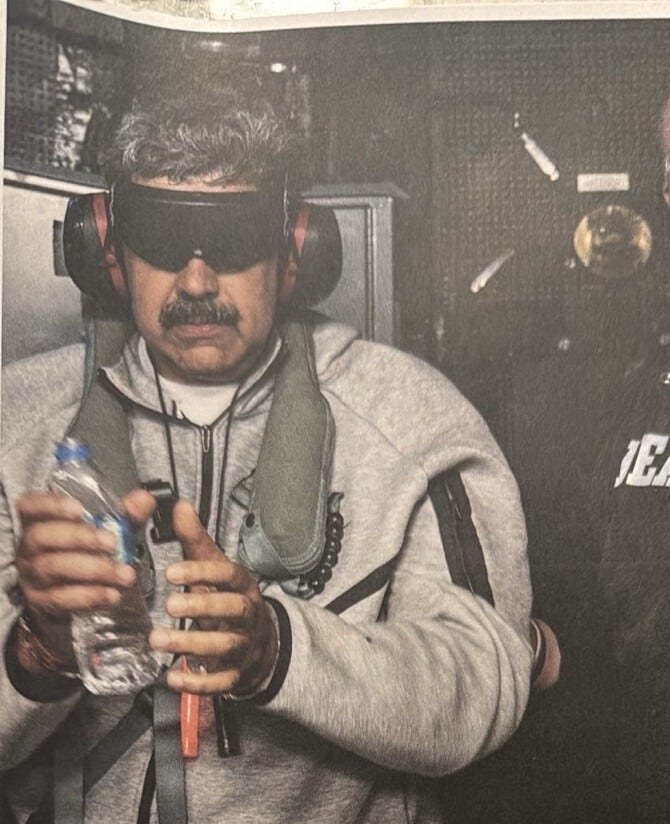
The basement still smells like concrete and bleach that didn’t quite take. I come down here every day, even though I’m not sure why, standing in front of the two chain bolts drilled into the cinderblock wall. There are also the two cots stripped to canvas, the two plastic buckets that still sit exactly where my father left them three weeks ago.
My father has been gone for three weeks now, and my mother is upstairs moving through the hallway like a draft, silent and cold, refusing to acknowledge the door that leads down here.
I run my finger over the cold metal of the chain. It’s tight. Secure. Just like he wanted.
It started eight months ago, not in this basement, but in a living room three houses down. And it involved a gun.
The Gun
Mr. Henderson had lived on the corner for twenty years, a man made of dried tobacco and corduroy, frail but unbending, and he owned a double-barreled shotgun that was mostly an antique but still functional, kept behind the umbrella stand where you wouldn’t notice it unless you knew to look.
My father, the police chief, went to see him on a Tuesday. I tagged along, standing on the porch while the cicadas screamed in the heat.
“You’re getting older, Arthur,” my father said, his voice low, reasonable. It was his ‘Chief’ voice—warm, enveloping, paternal. “With the break-ins lately? If someone gets in here, they take that gun, and suddenly we have a tragedy. You can’t wrestle a twenty-year-old.”
Mr. Henderson looked at the screen door. He looked at his hands. “It’s for protection, Chief. Just in case.”
“That’s what I’m for,” my father said. He put a hand on Mr. Henderson’s shoulder. “Register it with the department. Turn it in. We’ll guarantee your protection. You have my word.”
I watched Mr. Henderson waver. He wanted to believe and he wanted to be a good citizen.
He handed the gun over, wrapped in a blanket.
“What if someone breaks in now?” I asked as we walked to the cruiser.
My father tossed the bundle into the trunk. “Then he calls us. That’s what we’re here for.”
Two months later, the call came.
It was Miller. Miller was forty, thick-necked, the kind of man whose lawnmower was always louder than everyone else’s, and he had broken into Mr. Henderson’s house while the old man was at the grocery store, not to rob the place but just to move into the living room like he’d been planning it for months and was finally getting around to it.
When Mr. Henderson came home, Miller was sitting in the recliner, watching the evening news. He had changed the deadbolt on the interior door leading to the kitchen.
My father arrived to find Mr. Henderson shaking on his own front lawn. We went inside. Miller didn’t even stand up.
“This room’s mine now,” Miller said, pointing the remote at the TV. “Old man borrowed my power tools five years ago. Never gave ‘em back. We’re even.”
“I never had your tools!” Mr. Henderson’s voice cracked. “Get out of my house!”
“Make me,” Miller said. He didn’t look at Mr. Henderson. He looked at my father. He smiled.
“Arrest him,” Mr. Henderson pleaded. “Chief, he broke in.”
My father rubbed the back of his neck. He looked at the changed lock. He looked at Miller, who wasn’t moving. He pulled Mr. Henderson into the hallway.
“It’s complicated, Arthur,” my father said. “If I arrest him, this becomes a civil dispute. He-said-she-said about the tools. He’s not going anywhere tonight. If you fight this, he gets angry. He takes the kitchen next. Or the bedroom.”
“You promised,” Mr. Henderson said. “I gave you my gun because you said you’d protect me.”
“I am protecting you. I’m preventing escalation. I can’t station a deputy here over one room.” Each word came out flat and final. “Just give him the room. Sign a paper. Keep the rest of your house. It’s the safe play.”
I watched Mr. Henderson deflate. The stiffness left his back. He signed the paper my father wrote out on a notepad.
Miller moved a bigger TV into the house the next day. A 70-inch screen that glowed blue all night.
On the drive home, I stared out the window. “That doesn’t seem fair,” I said. “You told him to give up his gun.”
My father gripped the steering wheel. “If he still had it, one of them would be dead by now,” he said. “I kept people safe, sweetie. Sometimes peace is ugly.”
We drove past Mr. Henderson’s house. He was standing on his porch, in the dark, staring through his own living room window at the back of Miller’s head, bathed in the blue light of the television.
The Basement
Four months later, the heat broke and the screaming from Carter’s house got louder.
Everyone knew about the house two streets over—a man named Carter and his wife—because you could hear the screaming from the sidewalk, and we all saw the bruises on their teenage son’s arms, finger marks distinct and purple that no one wanted to talk about but everyone noticed. The wife’s elderly mother lived with them, a specter in the attic window, pressing her hand against the glass.
The system was failing them. CPS had been called three times. “Processing,” they said. “Backlog.”
Then the ambulance came. The grandmother had collapsed in the yard. Dehydration. Malnutrition. Signs of beatings. The paramedics took her, but they couldn’t take the boy. The parents stood on the porch, screaming obscenities at the neighbors who watched.
My father stood in our kitchen, watching the lights flash. “I’m not waiting,” he said.
It was a Tuesday evening. I was doing homework at the kitchen table.
I heard the shouting first. Then the sound of wood splintering. My father and three of his most loyal deputies kicked down Carter’s door. It wasn’t a patrol. It was a raid.
They dragged Carter and his wife out in handcuffs. They were kicking and spitting.
“Where’s the warrant?” the wife shrieked. “You can’t do this!”
“You’re dangerous,” my father barked, shoving her toward his unmarked SUV. “Those people aren’t safe with you.”
“This is illegal!” Carter yelled. “I know my rights!”
“The courts are backed up. I’m not letting you go back in there.”
The teenage son stood in the doorway, frozen, watching his parents get thrown into the back of a truck. He looked terrified. He looked relieved.
They didn’t go to the station. They came here, to our house.
My father marched them down the stairs to the basement. He had prepared it. The bolts were fresh, the cots were waiting. He locked them in.
I stood at the top of the stairs, clutching the banister. “Dad? What are you doing?”
He looked up at me, sweat on his brow, eyes bright with adrenaline. “Holding them. Until we can process the paperwork properly. Until the system catches up. You want that kid beaten again? You want that old woman to die? Sometimes you have to act.”
“This is different though, right?” I asked. “These people are actually dangerous.”
“Exactly,” he said. He locked the basement door and put the key in his pocket. “When people are in danger, you act. You don’t hide behind paper.”
A few days later, the son stopped by. He was staying with an aunt. He looked lighter. He cried on our porch.
“Your dad saved us,” he told me. “Everyone knew what was happening and no one did anything. But he did.”
When he left, I went downstairs and looked at the bolts. My father never removed them. “Just in case we need to protect someone else,” he said.
The Door
The knock came three weeks ago, not polite but a hammering that shook the frame of the house, the kind of sound that stops conversation and makes you look at whoever’s nearest to confirm they heard it too, and it was late, past ten, when my father frowned and set down his paper and went to the door.
Standing there was a man from the Homeowners’ Association three streets over. He was flanked by three men in tactical vests. Not police. Something else.
“You’re coming with us,” the man said.
“Excuse me?” My father tried to close the door, but a boot caught it.
“You convinced an old man to give up his gun, promised him protection, and then let a bully take his home because it was easier than fighting. You’re not a peacekeeper. You’re a coward who picks his battles based on who he’s afraid of.”
“That’s bullshit,” my father said, backing up. “I prevented a shooting!”
“You broke your word. You let Miller take what wasn’t his because Miller’s dangerous and Henderson isn’t. That makes you dangerous.”
My mother was screaming now. I ran to the hallway.
“You need a warrant!” I yelled. “There are rules! You can’t just come in here!”
The man looked at me. His eyes were flat. “Your father didn’t need a warrant for his basement, did he?”
“That was different!” I said. “They were abusing people! He saved them!”
“And your father’s a threat to this neighborhood. He picks and chooses who the rules apply to based on who scares him. We’re not waiting for the courts. Sometimes you have to act. Your father taught us that.”
My father didn’t fight. He looked at me, his eyes wide, confused, as if the laws of physics had suddenly reversed. They dragged him out into the night.
The door slammed.
My mother was screaming, and I grabbed the phone to call 911 before stopping halfway through dialing, staring at the buttons, trying to figure out who I was even calling. My father’s department? They weren’t coming. No one was coming.
The next day, the house felt like a tomb. I couldn’t stay inside. I walked down the street. I didn’t know where I was going until I found myself at the corner.
Mr. Henderson was on his porch. He was sitting in a rocking chair that didn’t rock anymore.
I walked up the steps and sat on the railing near him. A car passed. Miller’s TV glowed blue through Henderson’s window.
“I’m sorry about your dad,” he said finally. His voice was dry, like dead leaves.
I looked at him. “Will you help? Will you tell them? Tell them my dad was just keeping the peace? He isn’t what they say he is.”
Mr. Henderson stared through his own living room window. Inside, Miller was laughing at something on the massive TV, his feet up on Mr. Henderson’s coffee table.
“Your dad took my gun,” Mr. Henderson said. “He told me he’d protect me. Then he let a man take my home.”
“But he protected the Carter family. He saved that boy.”
“By locking people in his basement without a trial. And now someone is doing it to him.”
“That’s different,” I whispered.
Mr. Henderson turned his head.
“Is it?”
He turned back to the window. We both watched the blue light flicker in the room that wasn’t his anymore.
“I guess the new Association has plenty of resources,” he said. “Maybe they’ll get my living room back.”
I enjoyed this story. To me, it emphasizes the perils of taking matters of justice into one's own hands. This is why society needs rules, and trained judges to interpret and apply those rules. Without that, its anarchy.
The line “Sometimes peace is ugly” is excellent. Besides being credible and believable, it’s seductive.
We are left to feel the discomfort of judgment forming, and the narrator’s position is well judged.
“That’s different.”
“Is it?”
“Is it?” is devastatingly precise because it is so short. The reader can hear it. The reader can utter it, and it makes them uncomfortable.
The final line, “Maybe they’ll get my living room back,” is quietly brutal, like a monster quietly walking in the night.
The Association: the father’s judgment made portable, exported to another unspecified body.
The lingering discomfort I feel about the ending—that is the ending working.